Watching the Rest of Your Teeth Lean Into an Empty Space: The Hidden Domino Effect of Tooth Loss
You lose one tooth. Nothing seems different. Then, slowly, everything starts changing.
At first, the empty space doesn’t feel like a problem.
You can still eat comfortably. You can still smile with confidence. Life moves on, and replacing the missing tooth gets pushed further down your to-do list.
Weeks become months. Months become years.
What many people don’t realize is that a missing tooth rarely stays an isolated problem. While the gap may seem harmless, the rest of your mouth is already responding to the change. Slowly and silently, neighboring teeth begin shifting, your bite starts adapting, and the balance of your smile begins to change.
At Craft32 Dental Care & Implant Center, Baner, we often meet patients who are surprised to learn that the biggest consequences of tooth loss are not immediate—they develop gradually over time.
Your Teeth Depend on Each Other More Than You Think
Every tooth in your mouth plays a specific role. Together, they create a balanced system that allows you to chew efficiently, speak clearly, and maintain the shape of your face.
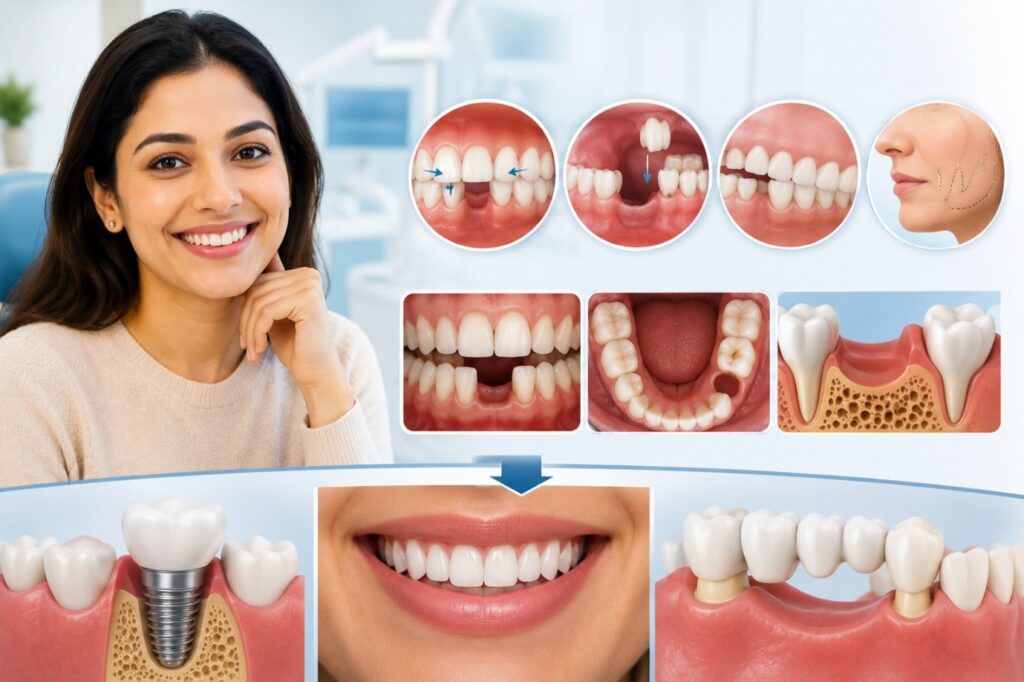
When a tooth is lost, that balance is disrupted. Imagine removing a book from the middle of a tightly packed bookshelf. The books on either side naturally begin leaning into the empty space. Your teeth behave in much the same way.
The neighboring teeth lose the support that once helped keep them in position. Over time, they start drifting toward the gap. Because this movement happens gradually, many patients don’t notice it until significant changes have already occurred.
Why Teeth Begin Shifting After Tooth Loss
Teeth are not permanently locked into place. They are supported by bone and specialized ligaments that allow them to respond to pressure throughout life.
When a tooth is missing, the surrounding teeth no longer have the same resistance that previously kept them aligned. As months pass, they slowly begin moving toward the empty area. Even a small amount of movement can affect how your teeth come together when you bite.
This shifting can create spaces where food becomes trapped, make oral hygiene more difficult, and increase the risk of cavities and gum disease. In some cases, patients notice that their smile looks slightly different, even though they can’t immediately identify why.
The Unexpected Impact on Your Bite
One of the most overlooked effects of tooth loss involves the tooth directly above or below the missing space.
Every tooth is designed to meet another tooth when you bite down. When one tooth disappears, the opposing tooth loses that contact. Without anything stopping it, the tooth may begin moving out of position.
Dentists often see teeth that have gradually extended into a gap left untreated for years. This can interfere with chewing, create bite imbalances, and sometimes complicate future treatment options.
What started as the loss of a single tooth can eventually affect multiple teeth throughout the mouth.
The Hidden Bone Loss Beneath the Surface
Perhaps the most serious consequence of a missing tooth occurs where you can’t see it.
Your jawbone stays healthy because your tooth roots stimulate it every time you chew. This regular stimulation signals the body to maintain strong, dense bone.
When a tooth is lost, that stimulation disappears. The body begins to resorb, or shrink, the bone in that area because it no longer sees a purpose for maintaining it.
Bone loss occurs gradually, but it starts surprisingly soon after tooth extraction. Over time, the jaw can lose both height and width, affecting not only oral health but also facial appearance.
Many people are unaware that untreated tooth loss can contribute to a more aged appearance around the mouth and jawline. This happens because the underlying bone structure that supports the facial tissues begins to diminish.
Everyday Problems That Can Develop
The effects of tooth loss often appear in small ways before becoming larger concerns.
You may find yourself chewing more on one side of your mouth because it feels more comfortable. Food may become trapped more frequently in certain areas. Cleaning between teeth may feel more difficult than before.
Some patients notice that their teeth no longer fit together the same way they once did. Others experience increased sensitivity or discomfort while eating. These changes may seem minor at first, but they are often signs that your teeth and bite are adapting to the missing space.
Why Acting Early Matters
One of the biggest mistakes people make is assuming that a missing tooth can wait indefinitely because it isn’t causing pain.
The truth is that many of the most significant consequences of tooth loss happen silently. Teeth continue to shift, bone continues to shrink, and bite changes continue developing regardless of whether symptoms are present.
Replacing a missing tooth sooner rather than later helps preserve the natural alignment of your teeth and prevents more complex problems from developing. Early treatment is often simpler, more predictable, and more cost-effective than waiting until additional issues arise.
Modern Solutions for Replacing Missing Teeth
Fortunately, dentistry has advanced significantly, offering highly effective ways to restore both function and appearance after tooth loss.
Dental implants are often considered the most natural replacement option because they replace both the visible tooth and the root beneath the gum line. This helps maintain jawbone health while restoring chewing ability and aesthetics.
Dental bridges remain another reliable solution, particularly when neighboring teeth can provide support. For patients missing multiple teeth, partial dentures may offer an effective and economical option.
The best treatment depends on factors such as oral health, bone condition, lifestyle, and personal preferences. A comprehensive evaluation helps determine the most suitable approach for each patient.
Protecting Your Smile for the Future
A missing tooth is never just a cosmetic concern. It affects how your teeth function together, how your jawbone stays healthy, and how your smile changes over time.
What begins as a single gap can gradually influence the position of surrounding teeth, alter your bite, and impact your long-term oral health.
That’s why replacing a missing tooth isn’t simply about restoring what’s been lost. It’s about protecting everything that remains.
Why Patients Trust Craft32 Dental Care & Implant Center
At Craft32 Dental Care & Implant Center, we believe every tooth plays an important role in maintaining a healthy smile. Whether you’ve recently lost a tooth or have been living with a gap for years, our team provides personalized solutions designed to restore comfort, function, and confidence.
Led by Dr. Sushila Malik, Gold Medalist Endodontist and founder of Craft32 Dental Care, the clinic combines advanced technology with nearly two decades of expertise to help patients achieve long-lasting oral health.
Visit Us
Craft32 Dental Care & Implant Center
Shop No. 2, Anandvan Apartment (Highland Projects), Near Vibgyor School Road, Pashan-Sus Road, Baner, Pune – 411045
📞 Call: +91 70300 12886
Search
Categories
- Advanced Dental Treatments 17
- Cosmetic Dentistry 19
- Dental Health 27
- Dental Implants 27
- Dental Treatments 27
- Digital Dentistry 25
- General Dentistry 15
- Laser Dentistry 5
- Oral Care Tips 6
- Orthodontics 8
- Patient Education 8
- Preventive Dentistry 8
- Restorative Dentistry 6
- Smile Correction 10
- Teeth Straightening Treatments 8
- Tooth Replacement 8
- Uncategorized 3
Recent Posts
-
 Smile Designing in Pune: Process, Cost and Before/After Results at Craft32
-
 Constantly Biting Your Own Cheek Because of Crooked Teeth: The Small Problem That Can Become a Daily Frustration
-
 Teeth Whitening Kits vs Professional Whitening in Baner: What Really Works Before Diwali?
-
 Scaling and Polishing in Baner, Pune: Benefits, Procedure, Cost and How Often You Need It
-
 Dental Crown in Baner, Pune: Types, Cost, Procedure and Lifespan