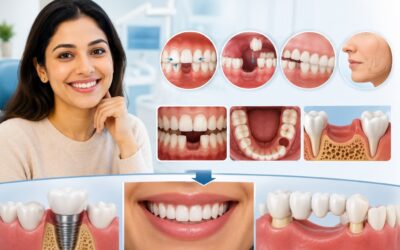
The Terrifying False Calm When a Severe Toothache Suddenly Stops
The pain was unbearable.
For days, maybe even weeks, your tooth throbbed relentlessly. Eating was difficult. Sleeping felt impossible. Every sip of coffee or glass of cold water sent a sharp jolt through your mouth.
Then one morning, something unexpected happened.
The pain disappeared.
At first, it feels like a miracle. You smile. You chew on the other side a little less carefully. You convince yourself that whatever was wrong has somehow healed on its own.
But what if that sudden relief isn’t good news at all?
What if the disappearance of the pain is actually a warning sign that the problem has become much more serious?
When Relief Isn’t Really Relief
A few months ago, Rohan, a 42-year-old working professional from Pune, developed a persistent toothache in one of his back molars. The pain started as mild sensitivity but gradually became a constant throbbing sensation.
His family urged him to see a dentist.
Instead, he relied on painkillers and home remedies.
Then, one weekend, the pain completely vanished.
Rohan felt relieved.
He cancelled the dental appointment he had been planning to book and assumed the tooth had recovered.
Three weeks later, he woke up with severe swelling on one side of his face.
The infection that had been causing the pain hadn’t gone away—it had spread deeper into the surrounding tissues.
What seemed like recovery was actually the opposite.
Why a Severe Toothache May Suddenly Stop
Many people assume pain disappears because the tooth has healed.
Unfortunately, teeth don’t usually heal themselves once the nerve becomes infected.
In many cases, the pain stops because the nerve inside the tooth has died.
Inside every healthy tooth is living tissue called the pulp. This tissue contains nerves and blood vessels that keep the tooth alive.
When bacteria from deep decay, cracks, or trauma reach the pulp, an infection develops. Initially, the irritated nerve sends strong pain signals.
As the infection progresses, the nerve may eventually die.
When that happens, the intense pain often disappears.
The problem is that the infection usually remains.
In some cases, it continues spreading silently beneath the surface.
The Dangerous Silence of a Dead Tooth
A dead or severely infected tooth may not hurt at all.
That is what makes it so dangerous.
Without pain, many people believe the problem has resolved itself. Meanwhile, bacteria can continue multiplying around the root of the tooth and in the surrounding bone.
Over time, this may lead to:
- Facial swelling
- Gum abscesses
- Pus formation
- Bone loss around the tooth
- Difficulty chewing
- Spread of infection to nearby tissues
By the time symptoms return, the condition may require more extensive treatment than it would have earlier.
Signs the Infection May Still Be Present
Even if the pain has disappeared, watch for warning signs such as:
- Swelling in the gums or face
- A pimple-like bump on the gums
- Bad taste in the mouth
- Persistent bad breath
- Tooth discoloration
- Sensitivity when biting
- Pressure around the affected area
Any of these symptoms can indicate that an infection is still active.
Why Waiting Can Cost You Your Tooth
One of the biggest misconceptions in dentistry is:
“If it doesn’t hurt anymore, it can’t be serious.”
In reality, many advanced dental infections become less painful as the nerve dies.
The longer treatment is delayed, the higher the risk of complications.
What might have been treated with a straightforward procedure can eventually lead to significant damage to the tooth and surrounding structures.
In some cases, delaying treatment may even result in tooth loss.
Saving the Tooth Before It’s Too Late
The good news is that many infected teeth can still be saved, even after the pain disappears.
Root Canal Treatment Can Eliminate Infection
One of the most effective treatments for an infected tooth is Root Canal Treatment (RCT).
During the procedure, the infected tissue is removed from inside the tooth, the canals are carefully cleaned and disinfected, and the tooth is sealed to prevent future infection.
Modern root canal treatment is designed to relieve discomfort while preserving the natural tooth.
At Craft32 Dental Care & Implant Center, advanced root canal procedures help patients eliminate infection and restore oral health without unnecessary extractions.
Crowns Help Protect Treated Teeth
After a root canal, a Dental Crown is often recommended to strengthen and protect the tooth.
A properly restored tooth can continue functioning comfortably for many years.
What Happens If the Tooth Cannot Be Saved?
Sometimes an infection has progressed too far, causing extensive damage to the tooth.
In these situations, extraction may become necessary.
When a tooth is removed, replacing it promptly is important to prevent shifting teeth, chewing difficulties, and jawbone loss.
Dental Implants are widely regarded as one of the most effective long-term replacement options because they restore both function and support for the jawbone.
The Real Danger Is Ignoring the Quiet
Pain gets our attention.
Silence often doesn’t.
That is why the sudden disappearance of a severe toothache can be misleading. While the discomfort may be gone, the infection causing it could still be actively damaging your oral health.
If you’ve recently experienced a toothache that mysteriously stopped hurting, don’t assume the problem has solved itself.
A professional dental evaluation can determine whether the tooth is truly healthy—or simply no longer able to signal distress.
Don’t Let Temporary Relief Become a Bigger Problem
Your body has an incredible way of warning you when something is wrong. Tooth pain is one of those warnings.
When that warning suddenly disappears after weeks of severe discomfort, it deserves attention—not celebration.
Early treatment can often save a tooth, prevent complications, and protect your long-term oral health.
At Craft32 Dental Care & Implant Center, Dr. Sushila Malik, Gold Medalist Endodontist and founder of the clinic, specializes in diagnosing and treating complex dental infections. With nearly two decades of experience, she helps patients preserve their natural teeth through advanced Root Canal Treatment, Dental Implants, Crowns & Bridges, Cosmetic Dentistry, Smile Makeovers, Orthodontics, and preventive dental care.
About Dr. Sushila Malik
Dr. Sushila Malik is a specialist Endodontist (Gold Medalist) and founder of Craft32 Dental Care, Pune. Her expertise in root canal treatments and restorative dentistry has helped thousands of patients save damaged teeth and regain healthy, confident smiles. She also has several national and international presentations and publications to her credit.
Contact Craft32 Dental Care & Implant Center
Address 1:
Shop No. 2, Anandvan Apartment (Highland Projects), Near Vibgyor School Road, Pashan-Sus Road, Baner, Pune – 411045
Phone: +91 70300 12886
Address 2:
Shop No. G4, Ground Floor, VTP Townsquare, Opp. Godrej Hillside 1, Mahalunge, Pune – 411047
Phone: +91 70300 65610
Internal Linking Opportunities
Within this article, naturally link to:
- Root Canal Treatment
- Dental Implants
- Crowns & Bridges
- Cosmetic Dentistry
- Smile Makeovers
- Kids Dentistry
- Orthodontics
- Dental Laminates
- Dental Fluorosis
Recent Posts
-
 Smile Designing in Pune: Process, Cost and Before/After Results at Craft32
 -
 Constantly Biting Your Own Cheek Because of Crooked Teeth: The Small Problem That Can Become a Daily Frustration
 -
 Teeth Whitening Kits vs Professional Whitening in Baner: What Really Works Before Diwali?
 -
 Scaling and Polishing in Baner, Pune: Benefits, Procedure, Cost and How Often You Need It
 -
 Dental Crown in Baner, Pune: Types, Cost, Procedure and Lifespan